

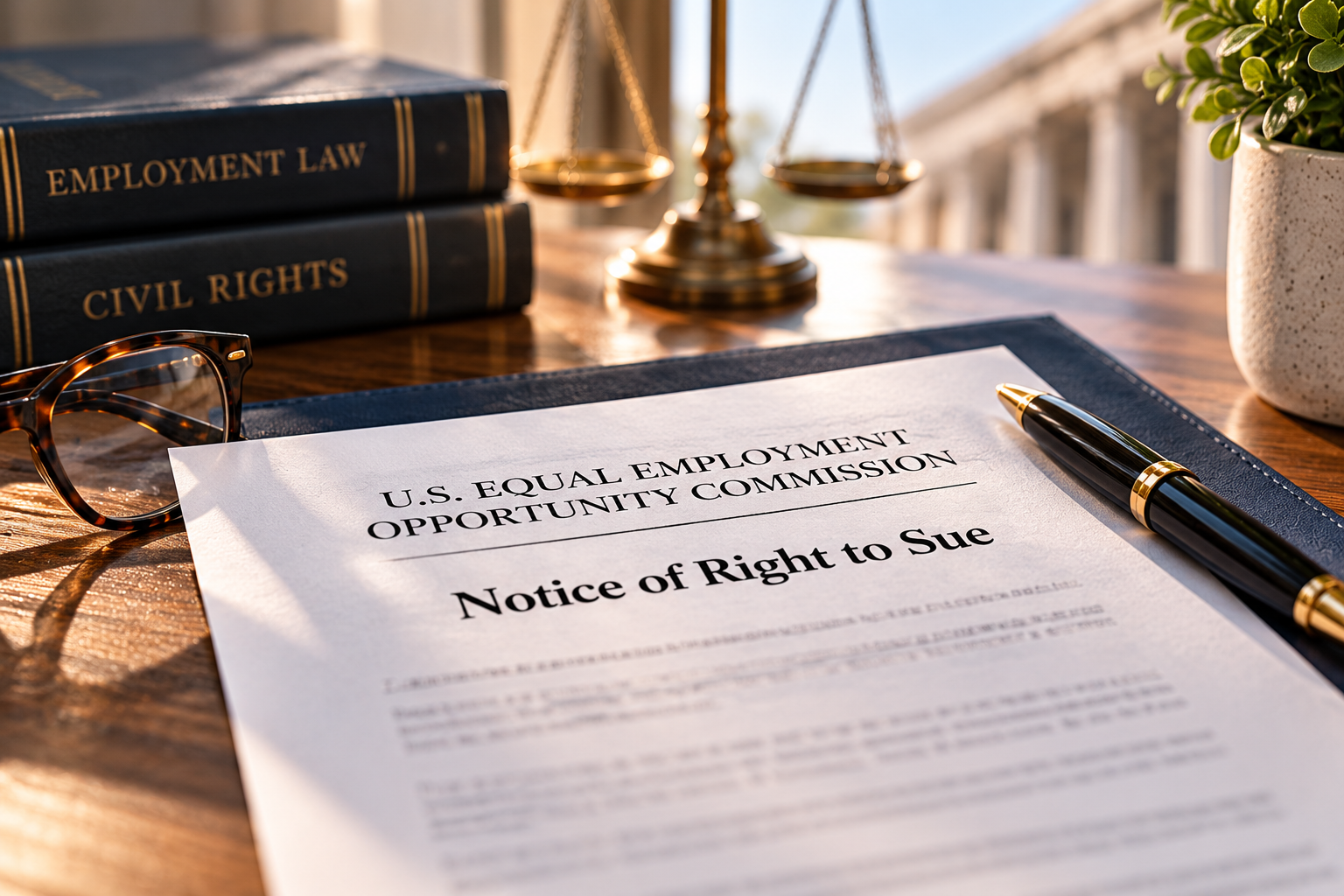
Receiving a letter from the Equal Employment Opportunity Commission (EEOC) can raise important questions about your employment discrimination claim. You may be wondering what the notice means, whether your case can move forward, and how much time you have to make a decision.
An EEOC Notice of Right to Sue is an important step in the employment litigation process. Understanding its meaning and the deadlines that follow can help you make informed decisions about protecting your rights.
What Is an EEOC Right-to-Sue Notice?
A Notice of Right to Sue is an official notification from the EEOC informing an individual that they may pursue certain employment discrimination claims through a lawsuit.
Generally, employees must first file a charge of discrimination with the EEOC before bringing a lawsuit under federal laws such as Title VII of the Civil Rights Act or the Americans with Disabilities Act.
The EEOC may issue a notice after completing its investigation, dismissing a charge, or under certain circumstances when an individual requests permission to proceed with a lawsuit.
Receiving this notice does not automatically mean the EEOC determined that discrimination occurred. It also does not necessarily mean that the underlying claim lacks merit.
Instead, the notice identifies an important point in the legal process when further action may be available.
How Much Time Do You Have to File a Lawsuit?
One of the most important things to understand about an EEOC Right-to-Sue Notice is that strict filing deadlines may apply.
For many federal employment discrimination claims, a lawsuit must be filed within 90 days of receiving the notice.
This deadline can be critical. Missing it may prevent an individual from pursuing certain claims in court, regardless of the underlying circumstances.
The applicable deadlines and procedures depend on the law involved. Age discrimination claims, Equal Pay Act claims, federal employment matters, and certain state-law claims may follow different rules.
Because the consequences of missing a deadline can be significant, individuals should carefully review their notices and seek legal guidance promptly.
What Should You Do After Receiving Your Notice?
If you have received an EEOC Notice of Right to Sue, several practical steps may help you prepare for a discussion about your legal options.
1. Review Your Notice Carefully
Read the entire notice and any accompanying documents.
Pay particular attention to the claims involved, the parties identified, the instructions provided, and the date you received the notice.
Keep a copy of the notice and any envelope, email, or electronic confirmation that may help establish when it was received.
2. Preserve Relevant Employment Records
Documentation can play an important role in employment litigation.
Depending on the circumstances, relevant materials may include:
Employment agreements and workplace policies
Performance evaluations and disciplinary records
Emails, text messages, and other workplace communications
Documents concerning termination or changes in employment
Previous complaints made to an employer or human resources department
EEOC charges, correspondence, and investigative documents
Preserve records you lawfully possess. Avoid altering evidence or improperly accessing confidential employer information.
3. Understand Your Potential Legal Options
A Right-to-Sue Notice permits certain claims to proceed to court, but it does not establish that a lawsuit will be successful.
Evaluating a potential case may involve reviewing the facts, available evidence, applicable law, procedural requirements, and possible legal remedies.
Not every employment dispute constitutes unlawful discrimination, and each situation requires an individual assessment.
4. Consider Speaking With an Employment Litigation Attorney
Employment discrimination cases can involve complicated legal standards and procedural requirements.
An attorney can review the EEOC notice, discuss the circumstances surrounding the employment dispute, evaluate potential claims, and explain possible next steps.
Because filing deadlines may already be running, it is important not to delay seeking guidance.
Does an EEOC Dismissal Mean You Have No Case?
Not necessarily.
The EEOC may dismiss a charge or conclude that the available information does not establish reasonable cause to believe discrimination occurred.
However, an EEOC dismissal does not always prevent an individual from pursuing a lawsuit.
Whether a claim can proceed depends on the notice issued, the applicable law, filing requirements, and the particular facts involved.
A careful review of the available evidence and procedural history can help clarify the options that remain.
Employment Litigation Representation in Oklahoma
Employment discrimination disputes can affect a person's career, financial stability, and future opportunities.
John Mac Hayes Law provides legal representation in employment litigation matters, including issues involving EEOC proceedings and potential federal employment discrimination claims.
Understanding the legal process is an important first step. Determining how that process applies to a particular situation requires careful attention to the facts and applicable deadlines.
Have You Received an EEOC Right-to-Sue Notice?
If you have received an EEOC determination, dismissal, or Notice of Right to Sue, understanding your options and the time available to act is important.
John Mac Hayes Law can discuss your situation, review relevant information, and help you understand what legal options may be available.
Visit johnmachayeslaw.com to learn more or contact John Mac Hayes Law.
Disclaimer: This article is provided for general informational purposes only and does not constitute legal advice. Reading this article or contacting the firm does not establish an attorney-client relationship. Legal deadlines and requirements vary depending on the facts and applicable law.